
Is Croatia safe to travel to? Yes, Croatia is generally safe for most travellers right now.
Both the UK Foreign Office and the US State Department rate it as low risk, where normal precautions apply.
The main things to watch are petty theft in busy areas, occasional summer wildfires, and standard road‑safety rules. See the UK guidance on safety and security, and stay up to date with the US State Department advisory.
In this guide I’ll show you what “safe” looks like on the ground—crime patterns, local laws, roads and ferries, nature risks (wildfires, earthquakes, and a few leftover minefields inland), what’s new for borders in 2026, and the insurance bits worth having.
My Pro Tip: You can also check live travel advice here. Just type in Croatia, and our tool pulls the latest alerts from government websites.
Ready for all the details? Let’s roll.
Cover your trip today
Planning a trip to Croatia? Get comprehensive travel insurance for medical needs, trip interruptions, and more with Rise & Shield. Quick & easy.
My Quick Takeaways
- Overall risk is low; normal travel sense goes a long way.
- Pickpockets and overcharging are the common issues in hotspots; book licensed taxis and keep receipts.
- Summer wildfires and occasional earthquakes are the main natural hazards—follow local instructions and call 112 if needed. The UK has clear safety guidance.
- There are still marked mine‑affected areas inland—stay on signed paths in affected counties.
- Driving is straightforward if you follow the rules: 0.05% alcohol limit (zero for under‑24s), winter tyres in season.
- Croatia is in the euro and the Schengen Area; EES is rolling out now and ETIAS is planned for late 2026 (not yet required). Croatia joined the euro and Schengen Area in 2023.
How safe is Croatia day-to-day?
Crime is comparatively low, and violent crime against visitors is rare.
You will see pickpockets in crowded places (Dubrovnik’s Old Town, Split’s Riva, tram stops in Zagreb), and there are occasional bar or “gentlemen’s club” overcharging scams.
Pay by card where possible and check receipts.
Taxis
Reports of assaults are uncommon but real. Use licensed taxis or reputable apps, share your ride status, and snap the cab’s ID plate before you set off—local police actively advise these steps.
Big events and football matches are usually peaceful, but avoid flashpoints around stadiums and follow police instructions. Again, check the UK safety page if you’re unsure.
ID, behaviour and local norms
Carry your passport (or Croatian ID if you live there).
Police can fine for public drunkenness, antisocial behaviour, or wandering towns shirtless or in swimwear—particularly in historic centres.
Drugs
Possession carries heavy fines, and trafficking brings prison. Don’t risk it.
LGBTQ+ travellers
Croatia recognises registered life partnerships for same‑sex couples and has anti‑discrimination laws.
Public attitudes are mixed by region; cities and the coast are typically more relaxed. Normal precautions apply.
Ready for unlimited adventure? Get travel insurance that covers over 150 activities and 190 destinations.
Natural risks you should actually plan for
Wildfires (June–September)
Dry, windy summers on the Adriatic can bring fast‑moving fires.
If you’re near a blaze, follow local instructions, avoid lighting barbecues outside designated areas in summer, and call 112 if you’re in danger.
Earthquakes
Croatia does get quakes (Zagreb 2020; Petrinja area in central Croatia). Most tremors pass without consequence, but always follow local guidance and avoid visibly damaged buildings.
Hiking, islands and the sea
Hiking is wonderful, but the weather changes quickly in the mountains. Tell someone your route, stick to marked paths, and if you’re lost or injured, call 112 and ask for mountain rescue (HGSS).
Beaches are generally safe; swim at lifeguarded spots where possible and heed flags and signage. Jellyfish and sea urchins are occasional nuisances—water shoes help.
Mine‑affected areas (inland only)
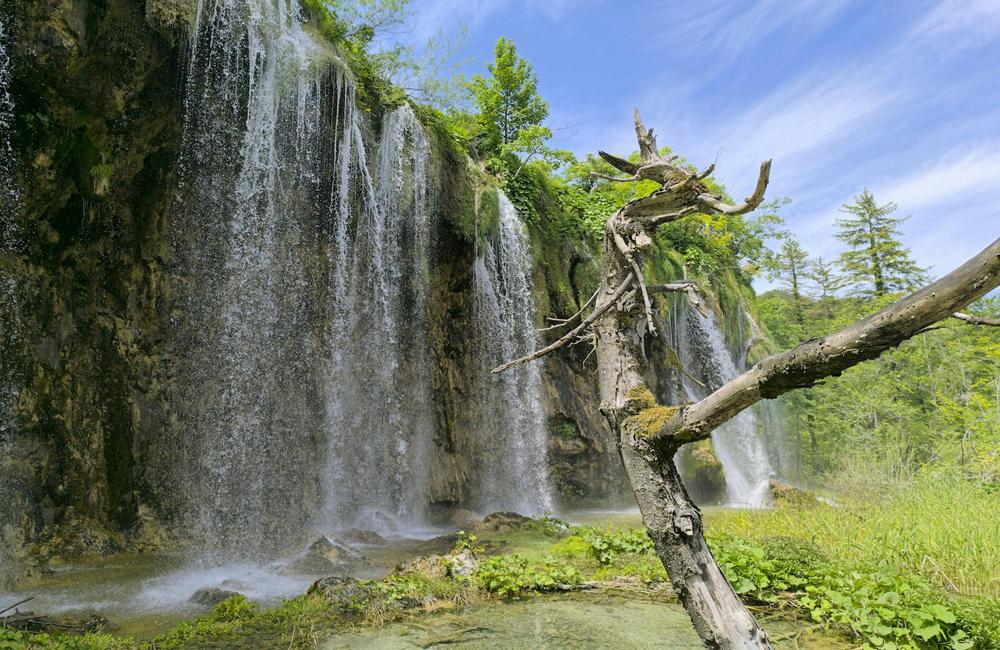
Croatia has reduced mine contamination to small, marked zones—mainly forest and rough terrain in parts of Karlovac and Lika‑Senj counties, plus some remote areas in Slavonia and near Plitvice.
Stay on signed trails; do not enter fenced or marked zones. Authorities expect full demining by the end of 2026.
Road, ferry and city transport safety
Driving is on the right. Police enforce limits and drink‑driving laws: 0.05% BAC for most drivers, 0.00% for under‑24s and some professional categories. Expect fines for violations.
Outside summer, winter rules apply for tyres and headlights. If you’re visiting in the colder months, check seasonal requirements in advance on the UK advice page.
On islands, roads are narrow and can be steep—take it steady and give buses space. Ferries are well run but can be delayed by strong winds; monitor operator alerts if you’re island‑hopping.
If you need help at any time, dial 112—the single European emergency number in Croatia. It connects you to police, fire, ambulance and mountain rescue.
Cover your trip today
Planning a trip to Croatia? Get comprehensive travel insurance for medical needs, trip interruptions, and more with Rise & Shield. Quick & easy.
Entry rules and border changes in 2026 (easy version)
Let’s discuss some common entry rules and border changes that may affect your travel plans.
Currency and borders
Croatia uses the euro and is in the Schengen Area, so travel from other Schengen countries is border‑free. It joined the euro and Schengen Area in 2023.
EES (Entry/Exit System)
the EU is phasing in biometric checks for non‑EU short‑stay visitors. Expect longer queues on some routes during rollout, with full operation expected by April 2026.
The UK explains EES under Entry requirements.
ETIAS
ETIAS (that online travel authorisation you’ve heard about) is not in force yet.
The EU plans it for the last quarter of 2026, with a transition period before it becomes mandatory.
In March 2026 you do not need ETIAS to visit Croatia. See the EU Home Affairs update.
Long stays
Stays of up to 90 days in any 180‑day period are visa‑free for most non‑EU visitors (including UK and US passport holders).
Make sure your passport is valid for the Schengen rules and that your accommodation registers your stay (hotels and hosts usually do this for you).
Practical safety checklist I actually use
Now let’s get into a practical safety checklist I don’t travel without.
- Keep valuables zipped away on trams, buses and in old towns.
- Use licensed taxis or ride‑hailing apps with the price shown up‑front—and keep the receipt.
- Photograph your passport’s photo page and store a copy in the cloud.
- If you’re driving, know the alcohol limit and speed limits before you set off.
- In summer, check local fire alerts and never light outdoor fires outside designated areas.
- Hiking or boating? Share your route/float plan with someone and carry water, layers and a charged phone.
- Off the beaten path inland, stick to marked trails only.
My Pro Tip: Screenshot the taxi’s licence details when you get in and share your live location with a friend. It takes 10 seconds and makes any dispute—or a lost‑property claim—much easier.
Ready for unlimited adventure? Get travel insurance that covers over 150 activities and 190 destinations.
Do I need travel insurance for Croatia?
You don’t legally need it, but I strongly recommend it.
Medical care is good, but hospital bills, last‑minute flight changes, or a mountain rescue can be expensive.
Travel insurance is designed for exactly these “what‑ifs”.
If you’re UK‑based, a GHIC only covers certain state‑provided treatment; it does not replace insurance (think private care, evacuation, baggage loss, or trip cancellation).
With Rise & Shield, emergency medical treatment, evacuation and repatriation come standard.
Our policy also includes Catastrophe Cover—helping with extra travel and accommodation costs if you’re forced to move because of an earthquake, storm, flood, epidemic or a local government directive—so you have options if a wildfire or other event disrupts your trip.
Always read the details first. Here’s our current Policy Wording.
A few policy points people often miss:
- If a government says “do not travel” to a place and you go anyway, parts of cover (and some activities) will not apply.
- Terrorism is generally excluded, but if you’re an innocent bystander and you were not travelling against official advice, emergency medical expenses may be considered.
- Helicopter rescues for medical reasons carry an excess on our policies—so plan conservatively for mountain days and island adventures.
If you’re comparing policies, start here:
- Read our current policy documents.
- Save our 24/7 numbers before you go: see Help and Emergencies.
- Check your destination is covered: see Destinations we cover.
Is it safe to travel to Croatia right now?
Short answer: yes. As of 20 March 2026, the US advisory is Level 1 (the lowest), and the UK’s guidance is to take normal precautions.
Keep an eye on local news in summer, follow fire restrictions, and use common sense in busy spots. Do that and you’ll likely have a smooth trip.
My Pro Tip: You can also check live travel advice here. Just type in Croatia, and our tool pulls the latest alerts from government websites.Ready for unlimited adventure? Get travel insurance that covers over 150 activities and 190 destinations.
FAQs about Croatia safety
Is Croatia safe for solo female travellers?
Yes,Croatia is broadly safe for solo women.
Use the same habits you’d use in any European city: choose licensed taxis or reputable ride‑hailing apps, avoid walking home alone from bars late at night, keep valuables secure in crowded areas, and tell someone your plans if hiking.
The UK and US both class Croatia as low‑risk overall. Call 112 in an emergency.
Are there still landmines in Croatia? Where?
Yes, but only in small, marked areas inland—mainly in parts of Karlovac and Lika‑Senj counties and some remote zones in Slavonia and near Plitvice.
Stay on marked paths and obey warning signs. Authorities expect full demining by the end of 2026.
Is it safe to drive in Croatia?
Generally yes. Roads are good, but police enforce limits and the drink‑drive law is strict: 0.05% BAC for most drivers and zero for under‑24s and some professionals.
In winter, expect tyre and headlight rules. Take extra care on narrow island roads and when overtaking on highways.
Is the Adriatic safe for swimming?
Mostly yes. Swim at lifeguarded beaches where possible, heed flags and warnings, and watch for sea urchins or the odd jellyfish.
If you get into trouble, signal for help; if you’re hiking to remote coves, carry water, footwear and a charged phone.
Do I need ETIAS to visit Croatia in 2026?
Not yet. In March 2026, ETIAS is not required. The EU plans to start ETIAS in late 2026 with a transition period before it’s mandatory. Croatia is already in the Schengen Area and uses the euro.
Cover your trip today
Planning a trip to Croatia? Get comprehensive travel insurance for medical needs, trip interruptions, and more with Rise & Shield. Quick & easy.
My Final Thoughts
And there you have it: is Croatia safe to travel to? Yes, Croatia is one of Europe’s easier, safer trips—historic cities, island‑hopping, national parks—all with sensible, manageable risks.
Know the small stuff (pickpockets, taxi etiquette, summer fire rules, and those inland no‑go zones), carry insurance, and enjoy it.